A Checklist for Buying a Healthy Citrus Tree at the Nursery
Buying a citrus tree is a little like buying a house: the parts that matter most are the ones the seller doesn't put in the window. A glossy Meyer lemon in full flower will sell itself, and yet the flowering is often the least useful thing to judge. The tree that fruits happily for the next twenty years is the one with a clean graft, a root system that hasn't been strangled by its pot, and leaves that tell an honest story. Here is what to inspect, roughly in the order you should inspect it.
Start at the graft union, not the fruit
Nearly all citrus sold in Europe is grafted: a fruiting variety joined onto a rootstock chosen for vigour, soil tolerance or dwarfing. Find that junction first. It usually sits somewhere between 10 and 20 centimetres above the soil line, and it should read as a tidy scar where the trunk goes straight, kinks slightly, and carries on.
Run a thumb over it. The callus should be firm and fully closed, with no cracks, no soft patches and no beads of amber gum. Check that the union sits clearly above the potting mix; if the bark below the scar is buried and permanently damp, it will rot, and you will spend years wondering why the tree sulks.
Then look below the scar for shoots. A strong, upright sucker emerging from the rootstock means the nursery has been trimming rather than solving a problem, and it will compete with the fruiting variety for water and nutrients. One small bud is easy to rub off at home. Three vigorous suckers are a warning sign.
Lift the pot and look at the roots
If the tree is small enough, tip it on its side and slide the root ball partway out. You are looking for roots that hold the shape of the pot but don't fill it like a plug of matted spaghetti. A few fine roots at the edges are normal. Thick roots circling the top of the ball, or a dense brown mat pressing through the drainage holes, means the tree has been in that container too long and may never straighten out.
While you're down there, note a few smaller clues. Soil pulling away from the inside of the pot suggests the mix has dried out and gone hydrophobic. A crust of algae or a patch of liverwort on the surface says the pot has been sitting wet for months. And smell the mix: fresh earth is fine, a sour or swampy smell is not.
One practical test if you're unsure about watering: ask to see how the tree takes water. If it runs straight through the pot and out the bottom within seconds, the root ball is either bone dry or the mix is exhausted.
Read the leaves, top and bottom
Leaves are the most talkative part of a citrus tree. On a healthy plant the mature foliage is evenly coloured and lightly glossy, with a firm, slightly leathery feel. Judge the older leaves rather than the newest ones: a fresh flush comes in pale and soft, and it should darken and stiffen over a few weeks. If the whole canopy is pale, that's not new growth, that's a problem.
What the colour is telling you
Yellowing between green veins across most of the tree usually points to a pH or nutrient issue, sometimes to unhappy roots. Brown, dry patches at the leaf tips and margins suggest salt build-up or erratic watering. Mottled, dull leaves with fine pale speckling often mean spider mites; look for faint webbing in the leaf joints to confirm.
Turn the leaves over
This is where the real evidence hides. Check the undersides and the soft stems for small bumps (scale), white cottony tufts (mealybugs) and clusters of tiny insects near the new tips (aphids). Sticky leaves are a giveaway: honeydew from sap-sucking insects, often followed by a black sooty film on the upper surfaces. Silver, winding trails through the leaf are leaf miner damage. None of these are impossible to treat, but you don't want to pay for a tree and inherit an infestation that spreads to the rest of your collection.
Finally, look at the shoot tips. Turgid, upright new growth that has started to harden off is the best sign of a tree with energy in reserve.
Check the trunk, the branches and the stake
The bark should be smooth and unbroken. Reject anything with weeping wounds, split bark, or dark sunken patches, and look carefully where ties have been attached. A plastic tie that has bitten into the trunk leaves a permanent pinch point that snaps in the first strong wind. Check the base of the trunk too, where a stake or a shipping strap may have rubbed.
Staking deserves a second look. A young tree needs support, but if the trunk visibly leans away from the stake and bends back the moment you loosen it, it has been tied up too long and hasn't developed any taper. That's not a deal-breaker, just something to correct at home by loosening the tie and letting the trunk move.
Branch structure matters more for lemons, which tend to grow as bushy, multi-stemmed plants. Look for well-spaced limbs with wide angles rather than a cluster of narrow forks all emerging from one point, which will split under the weight of fruit.
Ask the questions the label doesn't answer
Labels give you the variety. They rarely tell you what you actually need to know.
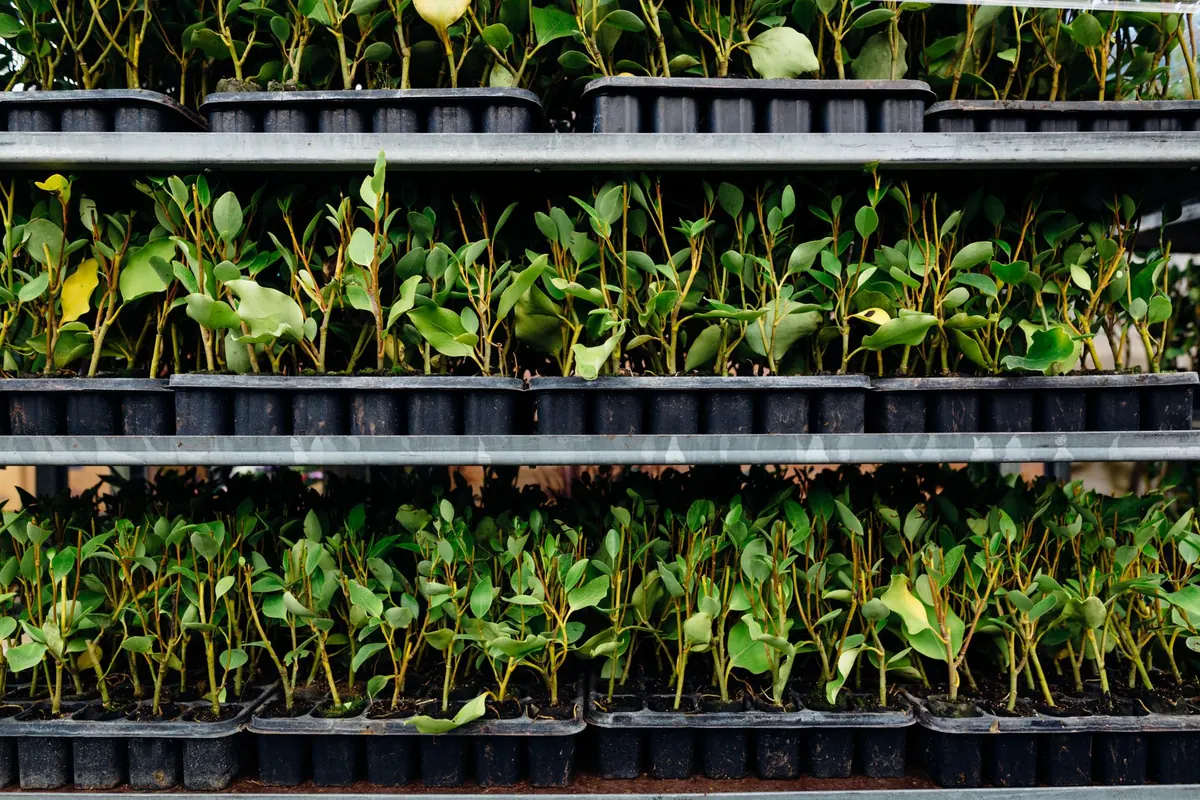
Ask which rootstock the tree is on, and why the nursery chose it. A vigorous rootstock suits a tree going into open ground; a dwarfing one such as Flying Dragon makes far more sense in a container you intend to keep on a terrace. Ask how long the tree has been in that particular pot — more than a full season in a small container means restricted roots. Ask whether it has been grown under cover, because a tree that spent the winter in a warm polytunnel will scorch if you put it straight into full sun. And ask what, if anything, has been sprayed recently, especially if you garden for pollinators and beneficial insects.
If you're unsure whether a variety suits your climate, say so. Limes are the most cold-tender of the common options; kumquats and some mandarins shrug off more chill; lemons flower almost year-round in mild conditions. A good nursery will talk you out of a plant that won't work.
Signs to leave it on the bench
- A graft union buried in the potting mix, or sprouting strong suckers from below.
- Thick roots circling the top of the root ball, or a solid mat through the drainage holes.
- Sticky leaves, black sooty film, or visible scale and mealybug colonies on the stems.
- Bark wounds from ties or handling, with soft or discoloured tissue underneath.
- Widespread yellowing between veins across the whole canopy.
- Sour-smelling soil, algae crust, or weeds that have been growing in the pot for months.
- A top-heavy tree on a spindly trunk that collapses without its stake.
The first week at home
Unwrap the tree and inspect it again in good light, then keep it apart from your other plants for a few days so any passengers stay contained. Water it thoroughly, let it drain completely, and never leave the pot standing in a saucer of water. Place it somewhere bright and sheltered for the first week or two, with morning sun rather than blazing afternoon heat, especially if it came out of a greenhouse. Repot only if the roots are genuinely crowded, and if you do, go up one pot size rather than several. Keep the label somewhere you'll find it again; in three years, when you want to know what rootstock is under that lemon, it will save you an argument with yourself.
Photo: K / Pexels